 DATARCTIC

Two roads diverged in a yellow wood, And sorry I could not travel both And be one traveler, long I stood And looked down one as far as I could To where it bent in the undergrowth;
Then took the other, as just as fair, And having perhaps the better claim, Because it was grassy and wanted wear; Though as for that the passing there Had worn them really about the same,
And both that morning equally lay In leaves no step had trodden black. Oh, I kept the first for another day! Yet knowing how way leads on to way, I doubted if I should ever come back.
I shall be telling this with a sigh Somewhere ages and ages hence: Two roads diverged in a wood, and I— I took the one less traveled by, And that has made all the difference.
I am very excited to start this journey, toward new experiences and projects! These blog posts will share the best sights and worst roadkills along our road.
First series of articles will be about HTML5 and its use in modern mobile development.

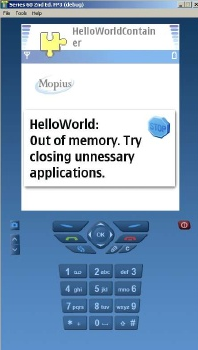
With the first mobile phones and other devices, the concept of mobile development came into existence. Lagging far, far behind the desktop development, it was challenging to say the least.
It was resource constrained: low processing power and little memory, and a very small screen for your use. It was just hard: You had to use esoteric OS or Frameworks (anyone remember Symbian?). You had to write your own helper libraries even for simple tasks such as laying out elements on screen. Garbage collection, what is that? Of course you manage your memory allocations yourself. Multiple threads needed? Of course, to make life more interesting.
Device types and OSs were unique. S40, S60, S80 Symbian, Blackberry or Windows Mobile had very little in common. Even if you could use the "same" framework on multiple platforms, it would be a severly crippled version.
Emulation was sluggish and often buggy. What a nice surprise when your layout tweaking hours were lost with the first install to a real device. Connecting a real mobile device to PC, so you could test and debug with that was a feat that few accomplished with the first try.
Distributing software for end users was a nightmare. There was no app store, users just downloaded the installation package and hoped for the best. And when you got the software delivered, it was hard to use: no touchscreen, a lot of menus. This was the time for pioneers and enthusiasts but, for normal people, there was no mobile yet (besides maybe reading e-mail on your Communicator).


With the introduction of Apple iOS and Google Android devices, things changed (and so quickly!). No longer hard to use, intuitive UI with capacitive touch screen revolutionized the use of mobile devices. Device resources had been climbing up all the time but now those resources were put to good use by offering better user experience. Also development took a huge step forward: emulators worked better and on-device testing and debugging was made much easier.
However, some problems remained for a mobile developer. If you wanted to cover all major platforms (Android, iOS and Windows Mobile/Phone), you had to use very different development tools. For iOS, you even had to use a specific computer to develop, Mac.
And you still had to deal with compiling your software and distributing it to end users. For public software that you could put to the app store, this problem was solved. For enterprise software, the problem remained. You had to use an MDM tool or setup a custom corporate app store to get the software in the hands of people.
Imagine you could develop AND debug your mobile software on your PC or Mac, then it would just run on any mobile device? Imagine you would only need one Framework, one API, one skill set.
Imagine you would do all your screen layouts using standardized, stable technology? Imagine you would not need to distribute your software; users would automatically always use the latest version? And, finally, imagine zero porting effort for your software when the Humanoid OS (with native APIs written in Dart, of course) takes over the world?
This is what HTML gives to you. Why would anyone NOT want these advantages when writing an enterprise application?

